

A PERSON
What Is 401(k)?
A practical guide to the workplace retirement account that turns part of your paycheck into long-term savings.
ReadForty per page — filter by the eight categories, or browse everything.
A PERSON
A practical guide to the workplace retirement account that turns part of your paycheck into long-term savings.
Read
A COMPANY
A practical guide to the quarterly report that reveals how American companies are really performing.
Read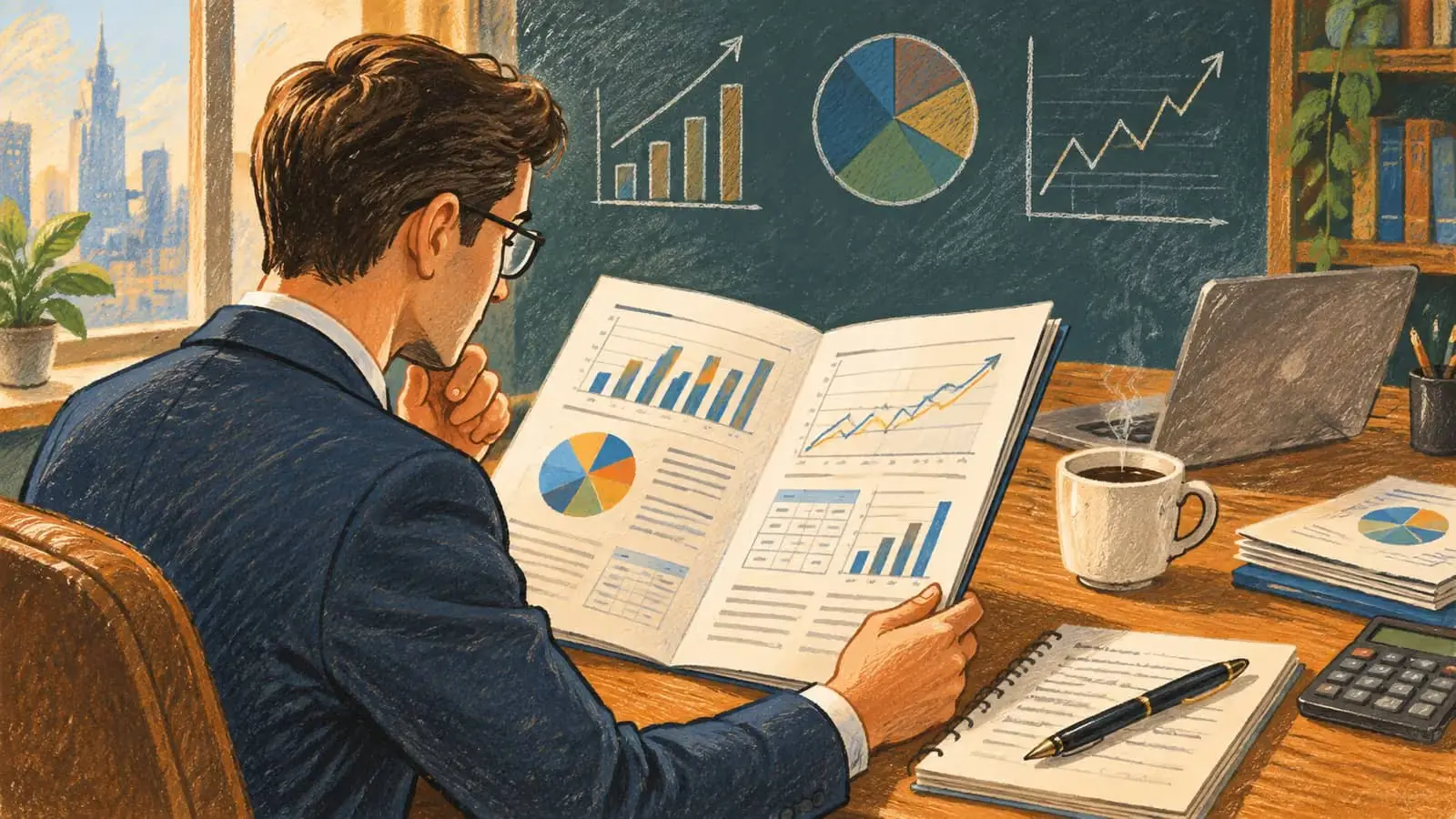
A COMPANY
A practical guide to the annual report that reveals how public companies actually make money, spend money, and face risks.
Read
OTHER
The hidden reason people protect old decisions long after those decisions stop protecting them.
Read
OTHER
The quiet mental filter that makes people notice proof for their beliefs and ignore signals that challenge them.
Read
OTHER
The first number, label, or idea we see can quietly shape what we believe is valuable.
Read
OTHER
The first number you see can quietly change what feels expensive, reasonable, or like a smart decision.
Read
OTHER
The choices around us quietly become evidence for what we believe is worth choosing.
Read
OTHER
A bigger paycheck can hide the career you quietly walked away from.
Read
OTHER
A simple investing routine helped Maya stop guessing the future and start building consistency.
Read
OTHER
When people feel protected from the consequences of a choice, their behavior can quietly change.
Read
OTHER
The fear of losing what we already have can quietly become more powerful than the desire to gain something better.
Read
OTHER
A simple investing habit helped Maya replace market guesses with a system she could actually follow.
Read
OTHER
A small fear of losing what we have can quietly outweigh the excitement of gaining something better.
Read
OTHER
Maya learned that building wealth is less about predicting the perfect moment and more about creating a system that works through uncertainty.
Read
OTHER
When buyers cannot see the difference between good and bad options, markets can quietly reward the wrong sellers.
Read
OTHER
A simple investing habit helped Maya stop predicting markets and start building financial confidence.
Read
OTHER
The hidden reason smart money decisions often look boring: spreading risk before life forces you to learn the lesson.
Read
OTHER
The biggest value in a purchase is often hidden between what something costs and what it is truly worth to you.
Read
OTHER
The quiet force behind wealth is often not a perfect decision, but a simple one repeated long enough for time to multiply it.
Read
OTHER
Maya learned that building wealth was less about predicting the perfect moment and more about creating a system she could follow.
Read
OTHER
The quiet force that turns other people's choices into evidence for our own decisions.
Read
OTHER
A small coffee shop change reveals how prices quietly move when demand and availability collide.
Read
OTHER
A small financial habit can become powerful when patience gives it enough time to grow.
Read
OTHER
A small fear of being left behind can turn ordinary choices into urgent decisions.
Read
OTHER
A crowded waitlist, a ticking clock, and a fear of being left behind can turn curiosity into a decision.
Read
OTHER
A familiar paycheck can feel safer than an unknown opportunity, even when staying quietly costs more.
Read
OTHER
A small business decision reveals why past effort can quietly trap us in choices that no longer serve us.
Read
OTHER
Maya thought investing required perfect timing. She discovered that consistency can be a smarter strategy than prediction.
Read
OTHER
When people are protected from the consequences of their choices, their decisions can quietly change.
Read
OTHER
Sometimes the hardest thing to quit is the thing we have already spent the most time trying to save.
Read
OTHER
When buyers cannot see the difference between good and bad options, the market starts rewarding the wrong sellers.
Read
OTHER
The mind does not just search for information — it searches for information that protects the story we already believe.
Read
OTHER
A hidden information gap can quietly change who enters a market — and why the wrong choices become the easiest ones to find.
Read
OTHER
Sometimes people do not choose what creates the most value. They choose what hurts the least to lose.
Read
OTHER
A small everyday purchase reveals the hidden gap between what something costs and what it is actually worth to us.
Read
OTHER
The choices and opinions of people around us often become shortcuts for deciding what deserves our trust.
Read
OTHER
A sold-out feeling can turn uncertainty into urgency — and make missing out feel more painful than making the wrong choice.
Read
OTHER
Sometimes the hardest part of getting ahead is realizing that your money is moving slower than your effort.
Read
OTHER
The choices around us quietly become evidence, changing what we trust, buy, and believe is worth pursuing.
Read