
OTHER
Why Maya Couldn't Find the Best Deals on a Marketplace Full of Choices
When buyers cannot see the difference between good and bad options, the market starts rewarding the wrong sellers.
6 min read
01The Story
Maya loved finding hidden deals online. She was the kind of shopper who read reviews, compared prices, and waited for the perfect moment before buying. She believed that with enough research, she could separate the great products from the disappointing ones.
One Saturday morning, Maya found a used camera marketplace with thousands of listings. The prices looked amazing. Some sellers offered cameras that were almost half the price of new ones. The photos looked professional, the descriptions sounded confident, and many listings had glowing reviews.
But Maya noticed something strange. The cameras that seemed like the best deals all looked almost identical. Everyone claimed their camera was barely used. Everyone said they were selling because they were upgrading. Everyone described their item as a rare opportunity.
Maya decided to spend extra time searching for the truly valuable cameras. She messaged several sellers and asked detailed questions. Some answered quickly. Others disappeared. After a few conversations, she noticed a pattern: the sellers with the highest-quality cameras often spent more time explaining their products, while sellers with questionable items used vague language and focused heavily on the low price.
A few weeks later, Maya talked with a friend who collected cameras. He explained that many experienced sellers had stopped using the marketplace because serious buyers could not easily tell the difference between a high-quality camera and a damaged one. Good sellers were tired of competing against cheaper listings that looked the same from the outside.
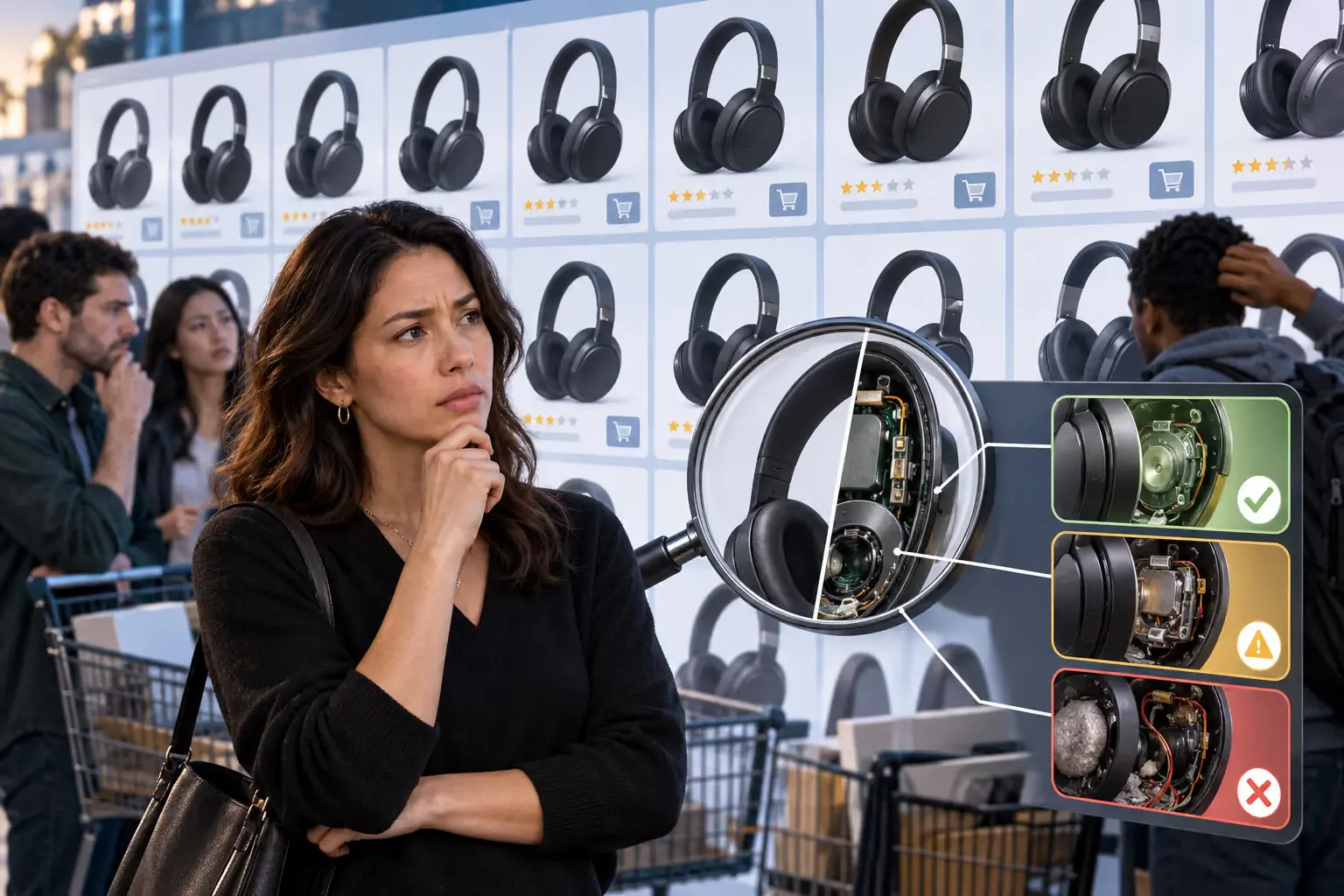
Maya realized the problem was not that there were no good cameras. The problem was that the marketplace made good and bad cameras look too similar.
02What Happened?
Maya had encountered a hidden market problem: when buyers cannot accurately judge quality before purchasing, lower-quality products can push higher-quality products out of the market.
In a healthy market, buyers reward sellers who provide better products. A great product earns a stronger reputation, higher prices, and more demand. But this only works when customers can recognize the difference.
When information is uneven, buyers often protect themselves by assuming that many options may be risky. Instead of paying more for quality they cannot verify, they choose cheaper options. This creates pressure on sellers who offer better products.
The result is a marketplace where the average quality can slowly decline. Good sellers leave because they feel they cannot get a fair price. The remaining sellers are more likely to be those comfortable competing in a market where quality is difficult to prove.
Economists call this a lemon market. The name comes from the idea that a buyer shopping for a used car may struggle to know whether they are getting a reliable vehicle or a problem hidden behind a polished exterior.
03The Hidden Logic
The hidden force behind a lemon market is not simply bad products. It is the information gap between buyers and sellers.
Sellers usually know more about what they are offering. A person selling a used phone knows whether the battery is weak. A homeowner knows about problems that are not obvious during a short visit. A company knows the limitations of its product better than its customers do.
This does not mean every seller is dishonest. The problem exists even when most people behave fairly. A buyer who cannot tell the difference between excellent and average quality has to make decisions using limited information.
Imagine two sellers offering similar-looking products. One invested time and money to create something reliable. The other cut corners. If customers cannot see the difference, they may refuse to pay the higher price the first seller needs to survive.
Over time, incentives change. Quality becomes harder to reward. Transparency becomes more valuable. Reviews, certifications, guarantees, demonstrations, and trusted brands become tools that help close the information gap.
This is why trust is not just a nice feeling in markets. Trust is infrastructure. It allows buyers to confidently spend money and allows good sellers to prove they are different.
04Where You See It
Online marketplaces are one of the easiest places to notice lemon markets. A product page can make a cheap imitation look almost identical to a carefully made product. Without reliable signals, buyers often focus on the most visible factor: price.
The same pattern appears in hiring. Companies reviewing resumes may struggle to identify the strongest candidates from limited information. Applicants with real skills can look similar to applicants who simply know how to present themselves well.
It also appears in services. Choosing a contractor, financial advisor, or consultant can be difficult because customers often cannot fully judge quality before paying. A low price can feel attractive until the hidden cost appears later.
Even businesses face this problem. Companies with excellent products sometimes struggle when customers cannot understand why their offering is different. They must find ways to make quality visible through proof, education, reputation, and customer experience.
The modern world creates more choices than ever, but more choices do not automatically create better decisions. When information becomes harder to evaluate, the market can reward what looks good instead of what actually is good.
05What You Can Do
As a buyer, do not assume the cheapest option is the smartest option. A lower price may represent a real deal, but it may also reflect quality that is difficult to see.
Look for signals that reduce uncertainty. Strong warranties, detailed explanations, consistent reviews, transparent policies, and verifiable experience all help reveal quality before you commit.
Ask better questions. Instead of only asking, "What is the price?" ask, "Why is this option priced this way?" and "What information would change my decision?" The goal is to uncover what is hidden.
As a seller, remember that quality alone is not enough if customers cannot recognize it. Great businesses spend time making their advantages clear because invisible quality often gets treated like average quality.
The best markets are not just places where people exchange products. They are systems that help good decisions happen. Information is what keeps those systems working.
06The Takeaway
When people cannot see the difference between great and average choices, the market may start rewarding the wrong ones.
The Takeaway
A market cannot reward quality it cannot see.