
OTHER
Why Maya's Good Reputation Made Everyone Trust Her Faster
The choices and opinions of people around us often become shortcuts for deciding what deserves our trust.
6 min read
01The Story
Maya ran a small neighborhood design studio that helped local businesses improve their websites, menus, and customer experiences. She was talented, organized, and careful with every project. But for the first year, getting new clients felt harder than doing the actual work.
When someone visited her website, they saw examples of her projects. They saw her services. They saw her contact page. But many visitors still left without reaching out. Maya wondered if she needed better pricing, a bigger portfolio, or a more impressive brand.
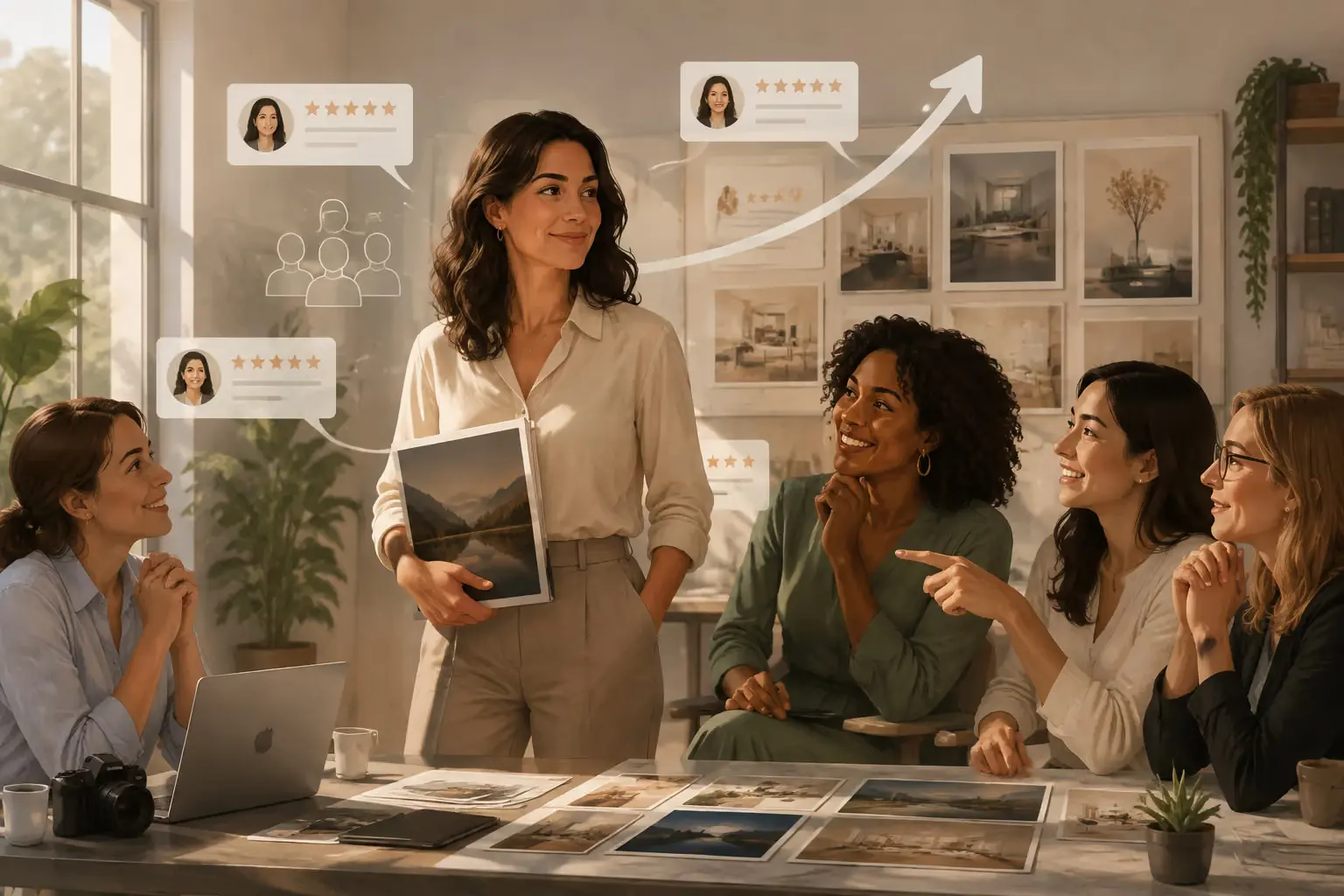
Then something unexpected happened. A popular local restaurant shared a photo of its redesigned menu and mentioned Maya's studio. Within a few days, Maya received several messages from businesses asking if she could help them too.
The strange part was that Maya had not changed her skills overnight. She had not added a new service. She had not lowered her prices. The only difference was that more people had seen someone else choose her first.
A few months later, Maya noticed another pattern. When potential clients asked about her work, they often mentioned other customers before they mentioned her designs. They would say things like, "I saw that you helped the café on Main Street" or "My friend recommended you."
Maya realized something important: people were not only evaluating her work directly. They were looking around for clues about whether trusting her was a safe decision.
02What Happened?
Maya's reputation grew because other people's choices became evidence. When customers saw that another business had already hired her, they treated that decision as a signal. The thinking was simple: if someone else trusted Maya, maybe she was worth trusting too.
This is social proof. It is the tendency to look at what other people are doing when deciding what to believe, buy, or choose. In uncertain situations, people often use the behavior of others as a shortcut.
The human brain constantly tries to save energy. Instead of deeply analyzing every option, we look for useful signals. A long restaurant line suggests the food might be good. A product with thousands of reviews feels safer than one with no feedback. A candidate recommended by respected coworkers seems less risky.
For Maya's clients, hiring a designer was not just a business decision. It involved uncertainty. They did not know exactly how the project would turn out. Seeing that other businesses had already taken the step reduced that uncertainty.
The interesting part is that social proof does not require everyone to be an expert. People often respond to visible behavior more than invisible quality. A crowd, a recommendation, or a familiar name can become a shortcut for trust.
That shortcut can be useful. Without it, every decision would require endless research. But it can also create mistakes when people follow popularity instead of looking at whether something actually fits their needs.
03The Hidden Logic
Behind social proof is a simple question people ask without realizing it: "What do people like me do in this situation?"
Humans evolved in groups where learning from others was valuable. If many people avoided a certain path, copied a successful technique, or trusted a reliable source, following those signals often improved survival. Other people's actions became information.
Modern life still runs on these signals. A buyer may choose a product because thousands of people reviewed it. A job applicant may prefer a company because employees talk positively about it. A customer may trust a service because recognizable businesses already use it.
Businesses understand this deeply. That is why companies highlight customer stories, testimonials, ratings, user counts, awards, and partnerships. These signals are not just decoration. They reduce hesitation by showing that others have already crossed the same decision point.
But social proof has a hidden weakness: popularity and quality are not always the same thing. A crowded restaurant can be great, but it can also simply be located in a busy area. A viral product can be useful, but it can also benefit from attention more than actual value.
The strongest decisions happen when social proof is combined with personal judgment. Other people's choices can provide clues, but they should not replace thinking.
Maya eventually changed how she presented her studio. She stopped only showing finished designs and started showing the businesses she helped, the problems they solved, and the experiences customers shared. She was not trying to manufacture popularity. She was making useful evidence easier to see.
The hidden logic was not that people wanted to follow a crowd. It was that people wanted reassurance when making uncertain choices.
04Where You See It
You see social proof every day in shopping. A product with thousands of positive reviews often feels safer than an unknown alternative. Even when people compare features and prices, the behavior of previous buyers influences the final choice.
You see it in restaurants and entertainment. Lines outside a place, packed events, and trending shows create signals that something is worth attention. Sometimes curiosity begins because other people already showed interest.
You see it at work. Employees often pay attention to who gets recognized, whose ideas gain support, and which behaviors leaders reward. People learn workplace rules by watching what succeeds around them.
You see it online. Likes, shares, follower counts, and comments can shape how people judge information. A post with strong engagement can feel more credible before someone even checks the details.
You see it in careers. A recommendation from a respected person can change how others view someone's ability. A candidate's reputation becomes a shortcut for evaluating potential.
You also see the darker side. People sometimes join trends they do not actually enjoy, buy products they do not need, or repeat opinions because many others appear to believe them. The crowd can provide guidance, but it can also create pressure.
05What You Can Do
First, notice when other people's behavior is influencing your decision. Ask yourself: "Do I actually want this, or does it simply feel safer because others chose it?"
Second, separate evidence from popularity. Reviews, recommendations, and examples can be helpful, but look for information that explains why something works, not just how many people chose it.
Third, use social proof intentionally when building trust. If you run a business, show real customer experiences. If you are building a career, make your contributions visible. People cannot trust evidence they never see.
Fourth, be careful with silent comparison. Someone else's choices may reflect different goals, resources, or circumstances. Following another person's path without understanding the reason behind it can lead to poor decisions.
Finally, remember that being early often feels uncomfortable because social proof has not arrived yet. Many good ideas look uncertain before enough people recognize their value.
06The Takeaway
People often decide what is valuable by watching what others already value — but the smartest decisions come from knowing when to follow the crowd and when to question it.
The Takeaway
Sometimes the strongest recommendation is not what someone says — it is what everyone else already chose.