
PSYCHOLOGY
Why Found Money Gets Spent Faster Than Earned Money
A surprise twenty can vanish overnight — while the same twenty from your paycheck feels untouchable.
6 min read
01The Story
Maya opens her mail after a long Tuesday at a clinic outside Columbus. Between a dental reminder and a catalog she never ordered sits a thin envelope from an old insurer: a $180 overpayment refund. Not huge. Not planned. Just there — a quiet surprise after a double shift of charting and hallway chaos.
She transfers it to checking, then stands in her kitchen telling herself she will leave it alone. By Thursday she has bought noise-canceling earbuds she has wanted for months, tipped for a restaurant delivery she would usually skip, and justified a nicer grocery run as using the refund. Friday morning, the account is nearly flat again. Her regular paycheck deposit from Wednesday still feels sacred — rent, gas, groceries, do not touch.
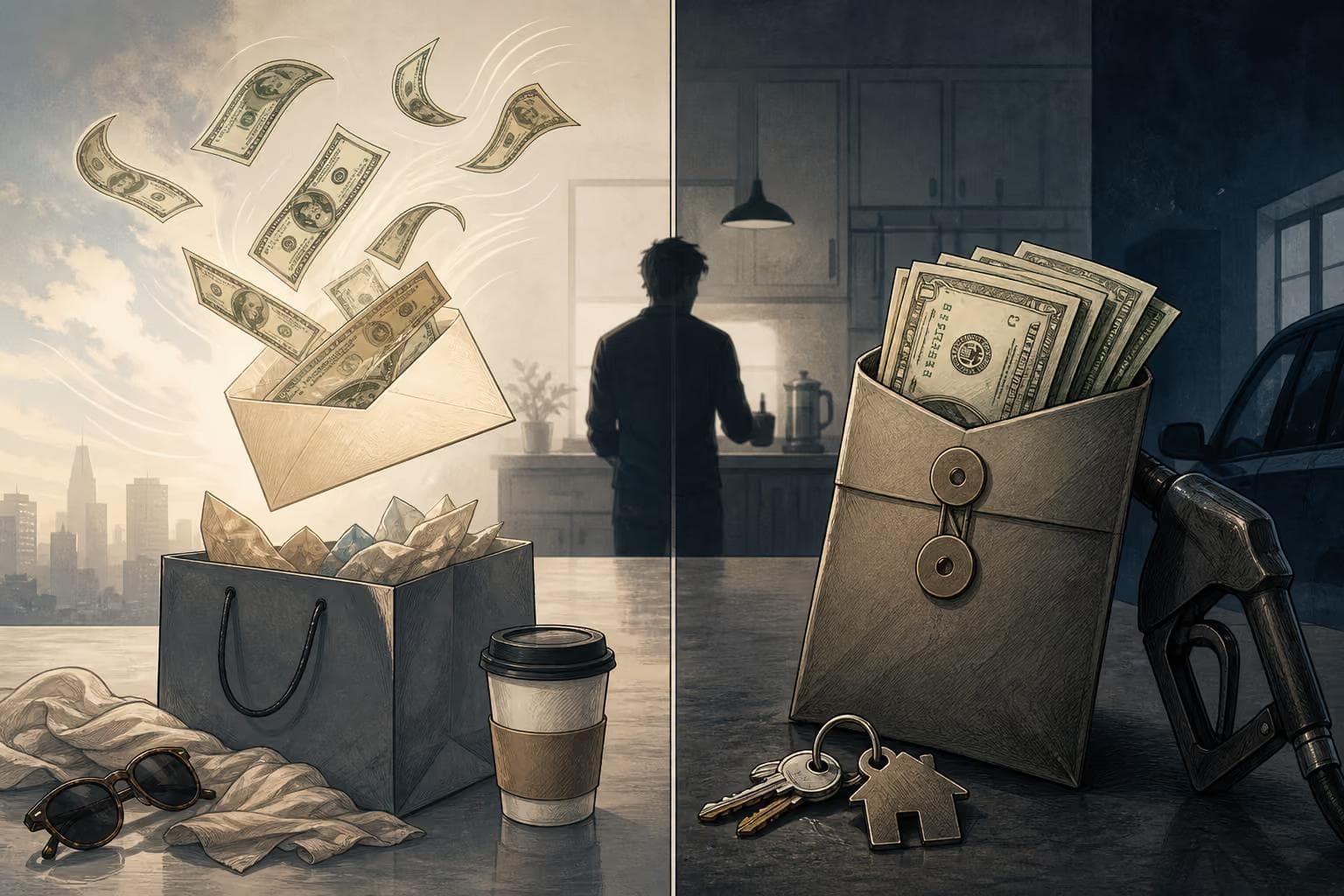
Same dollars. Same bank. Different story in her head. The refund felt like a gift the universe dropped on the porch. The paycheck felt like hours of her life converted into numbers. One pile invited spending. The other demanded respect. She even caught herself saying it out loud to a coworker: It was free money, basically.
That is the Story → Contradiction turn: why does money you did not sweat for feel easier to burn than money you earned — even when both spend the same and both leave the same empty space in the balance?
02What Happened?
Maya did not suddenly become reckless. She applied a quieter rule most people carry without naming it: unexpected money and planned money live in different mental folders, even when they share one checking account.
The refund arrived with no schedule, no weekly plan, and no this is for bills label. So it landed in a loose category — extras, treats, permission. Her paycheck arrived with a job attached and a list of obligations already waiting. Same balance sheet. Different internal tags. The spending felt like celebrating an arrival rather than making a trade.
The surprising pattern is simple in plain English: when cash shows up without a work story, people often spend it faster and with less friction — not because they are careless, but because the money feels unmarked. Unmarked money does not trigger the same pause. It feels temporary, and temporary things get temporary rules.
Notice what did not happen. Maya did not spend Friday rent money. She protected the labeled dollars and burned the unlabeled ones. The pattern hides inside that split: discipline for some money, ease for other money, even when both equal one hundred eighty dollars.
03The Hidden Logic
One way to understand this is through mental accounting: people treat identical dollars as if they belong to separate jars based on where the money came from and what story travels with it. The jars are not in the bank. They are in the story you tell about the deposit.
Earned money usually inherits a biography — hours worked, tasks finished, a boss, a schedule. That biography raises the emotional price of spending. Found money — refunds, gifts, cash-back wins, an old check you forgot — arrives with almost no biography. It feels unclaimed, light, temporary. Temporary money gets temporary rules, and temporary rules are generous.
Call the framing Found Money vs Earned Money. Found Money feels like a bonus the system owes you. Earned Money feels like part of a plan you already promised yourself. The wallet does not care. The mind does. One framing phrase, reused: If it has no work story, it gets a soft pass.
It resembles a windfall bias in everyday clothing: surprise cash lowers the guilt barrier before it lowers the balance. You are not richer in a lasting sense. You are briefly freer from the story that usually slows you down. That freedom is the product. The spending is just how it expresses itself.
This is education, not a verdict on character. Plenty of careful adults soft-spend found money and still protect the paycheck hard. The force is the label, not a failure of willpower.
04Where You See It
You see it when a store credit after a return becomes a shopping trip instead of a bill payment. The credit feels like house money — as if the retailer handed you chips to keep playing. Returning a coat and walking out with two new ones is the same balance game wearing a receipt.
Credit-card cash-back rewards play the same game. Seven dollars earned at a grocery store rarely sits beside seven dollars of wages. It becomes coffee upgrades, impulse Amazon adds, or a slightly nicer dinner that would have felt wasteful on paycheck day. The phrase cash back sounds like a prize, and prizes get opened.
Airlines and hotel points work harder. Points are money wearing a costume. Because they do not look like cash, people spend them on seats and room upgrades they would never buy with a debit card. Gift cards are cousin currency: labeled fun, spent fast, defended less.
Workplaces show a cousin version every December. The year-end bonus can disappear into travel and gadgets while the regular biweekly deposit continues funding rent with iron discipline. Same person. Same month. Different labels on the inflow.
Even small wins count. Finding a twenty in a coat pocket rarely becomes a savings transfer. It becomes lunch. That tiny version is the full pattern in miniature: unmarked arrival, unmarked exit.
05What You Can Do
Use a two-question pause before found money moves: Where would this sit if it had arrived as wages? and What label am I inventing for it right now? Say the answers out loud if you can. Spoken labels are harder to hide from.
Then give the windfall a temporary job for forty-eight hours — not a budgeting sermon, a mental parking spot. Parked money cools. Unparked money races. After two days, ask whether the spend still feels like a decision or only like permission wearing new clothes.
A second reframe helps on gift cards, points, and store credits: translate them into paycheck English first. Ten thousand airline points become a number you would compare with gas and groceries. When the costume drops, the soft pass often drops too.
You are not trying to become stricter about pleasure. You are trying to stop treating surprise cash as a different species. When found money and earned money share one rule set, the itch to use it or lose it often fades on its own — and what remains is a cleaner choice.
06The Takeaway
Your wallet holds one kind of dollar. Your mind keeps two kinds of stories — and the lighter story spends first.
The Takeaway
Your wallet holds one kind of dollar. Your mind keeps two kinds of stories — and the lighter story spends first.